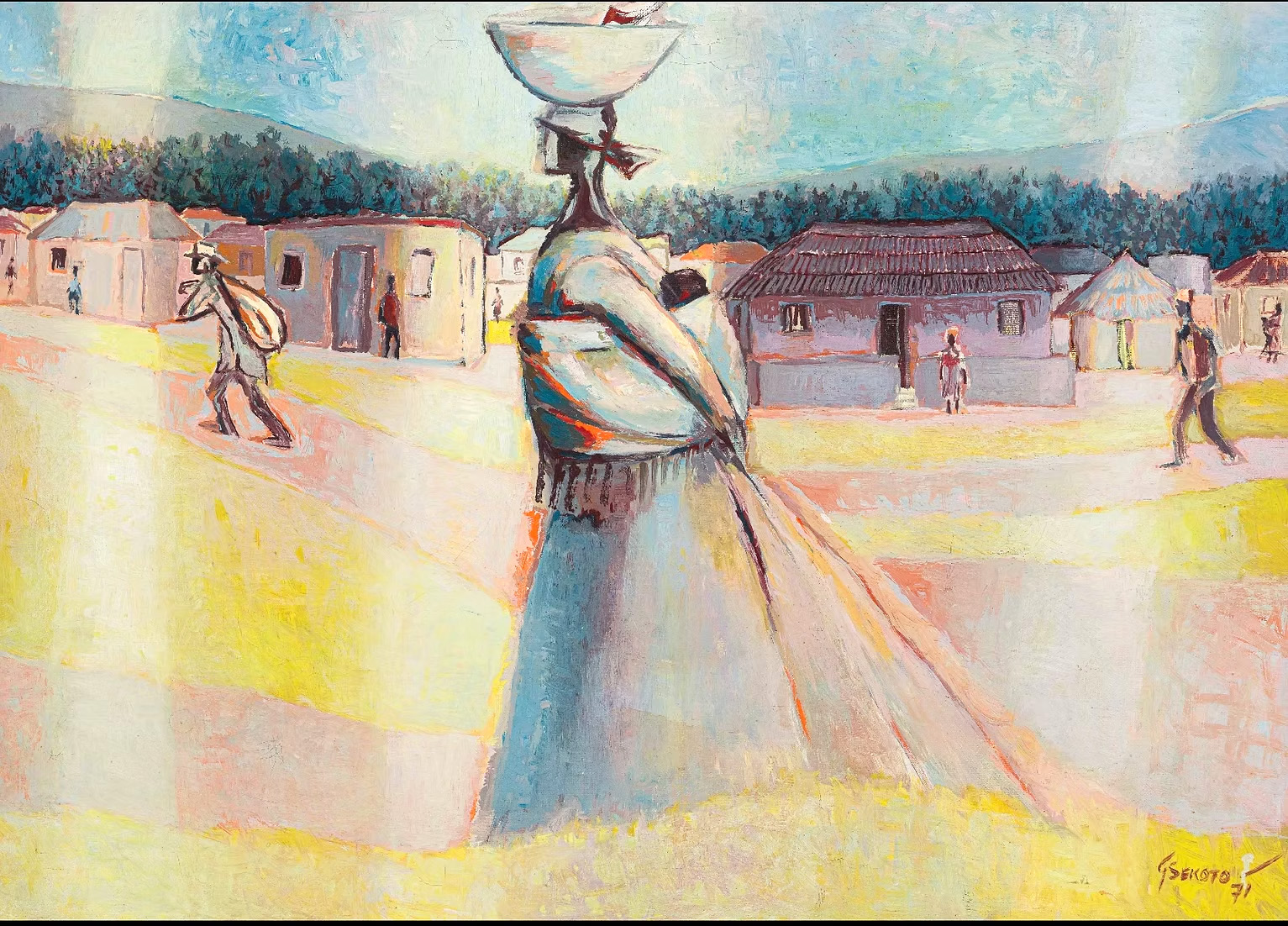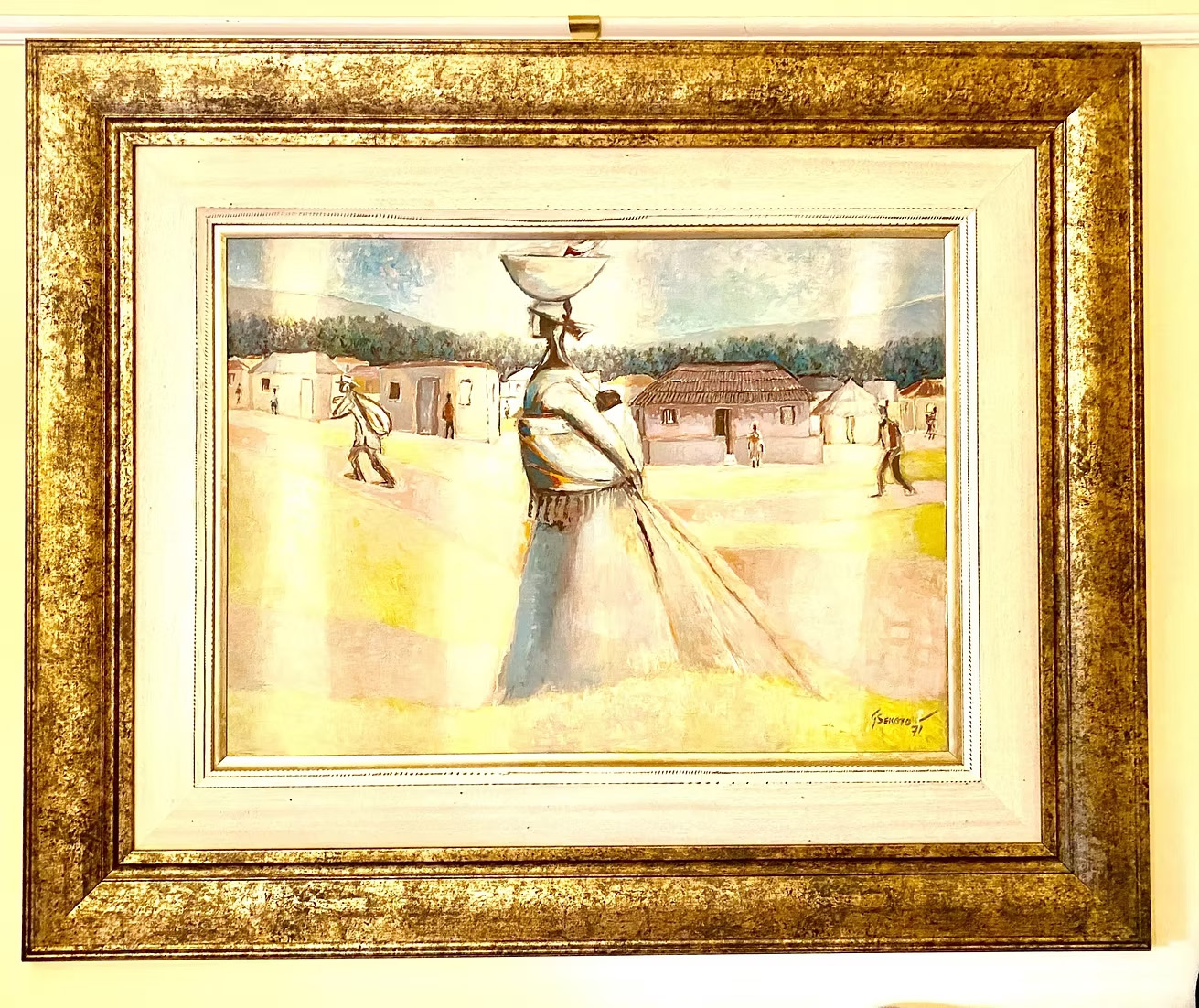
Oil on canvas laid down on board, signed and dated ‘71’. Currently on display. Reference S1062.
Born in 1913 at Botshabelo, a Lutheran mission station near Middelburg, Gerard Sekoto began drawing as a child. He first gained access to coloured pencils as a teenager, an introduction that transformed his approach to art.
His years in Sophiatown, District Six and Eastwood produced vibrant paintings recording the cultural activity and tensions of township life. These works preserve a visual record of neighbourhoods later demolished during the 1950s and 1960s.
In 1947, Sekoto left South Africa for Paris, where he remained for the rest of his life. France brought new inspiration as he revisited familiar subjects and explored different themes, retaining the deep sense of humanity that characterised his work.
Recognition of his art grew towards the end of his life, supported by Barbara Lindop’s research and correspondence with him. Her work helped locate paintings previously thought lost and establish details of his life before his death in 1993.
Sekoto exhibited widely in South Africa and internationally, including in the South African touring exhibition that opened at the Tate Gallery in 1948. His honours included an honorary doctorate from the University of the Witwatersrand and recognition as a Chevalier des Arts et des Lettres in 1989. He was posthumously awarded the Order of the Ikhamanga in 2003.
Provenance
Previously held in a private collection assembled by a South African collector during the 1990s. Strauss Art of Gauteng, South Africa, was instructed to sell the collection in 2024. The Gallery at Hayling acquired the painting directly from Strauss Art that year.